 +1
+1 
 Air domes

 Inflatable domes
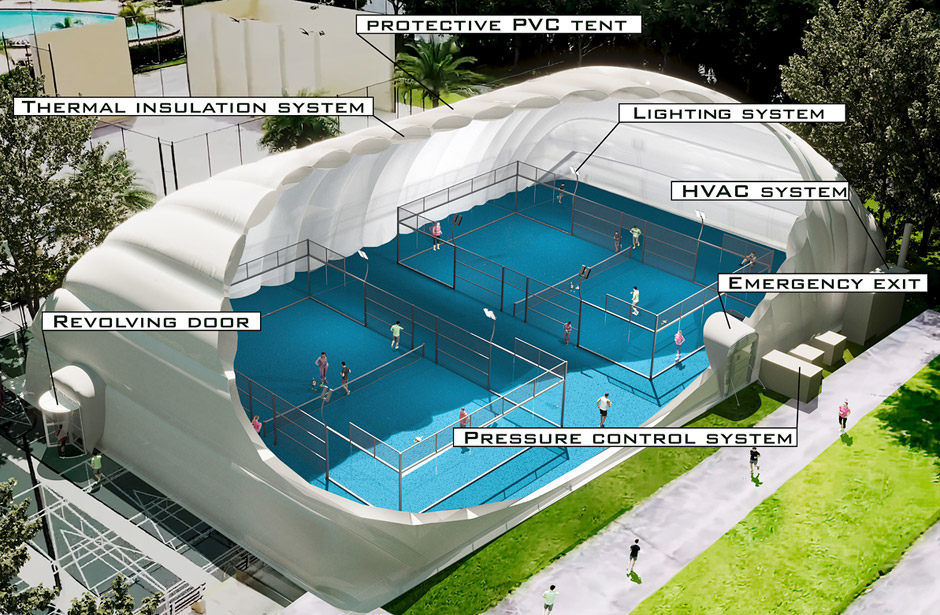
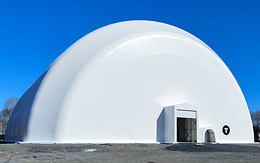
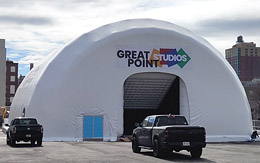
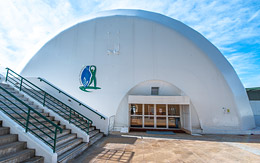
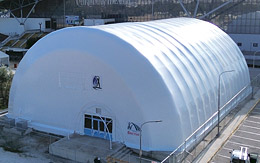
An air-supported building is a reinforced fabric shell hermetically attached to the foundation or anchoring system. Air is supplied inside the shell to create controlled excess pressure, which supports the structure and helps it resist wind and snow loads.
Shell
The shell can be single-layer or double-layer. A double-layer PVC membrane improves resistance to heat transfer and can reduce heating costs by up to 30%. In a double-layer air-supported building, the distance between the membranes is about 1.6 ft.
Windows and doors
An air-supported building is an airtight structure, so access points must limit air leakage. Airlock systems, including vehicle and equipment airlock doors, help maintain internal pressure during entry and exit. Modern PVC fabrics also make it possible to design translucent shells, and glazed systems can be integrated when required.
Air supply system
The pressure equipment is designed for efficient operation and fast inflation of the building. A standard package includes the main fan and an emergency pressure system that activates if the main fan fails or power is interrupted. Automatic pressure control keeps the system stable and reduces the risk of operator error. The equipment is placed outside the building in a galvanized soundproof box.
Foundation
An air-supported structure can be installed on a prepared site. The foundation functions mainly as an anchor that prevents uplift. Its depth can be 30-50 cm, and a strip foundation up to 1.6 ft wide can reduce preparatory costs. For temporary use, the building can also be secured with ballast weights, such as PVC bladders filled with water or sand around the perimeter.
Lighting
During the day, translucent materials can provide natural lighting inside the air dome. For evening operation, the structure can be equipped with artificial lighting selected for the activity and interior layout.
Creating indoor environment
To provide a comfortable indoor environment, air domes can be equipped with heat generators, hot air blowers, ventilation, and air conditioning systems. Vector also has experience creating controlled indoor environments for specialized uses, including plant-friendly conditions.